
Rakour
Menu
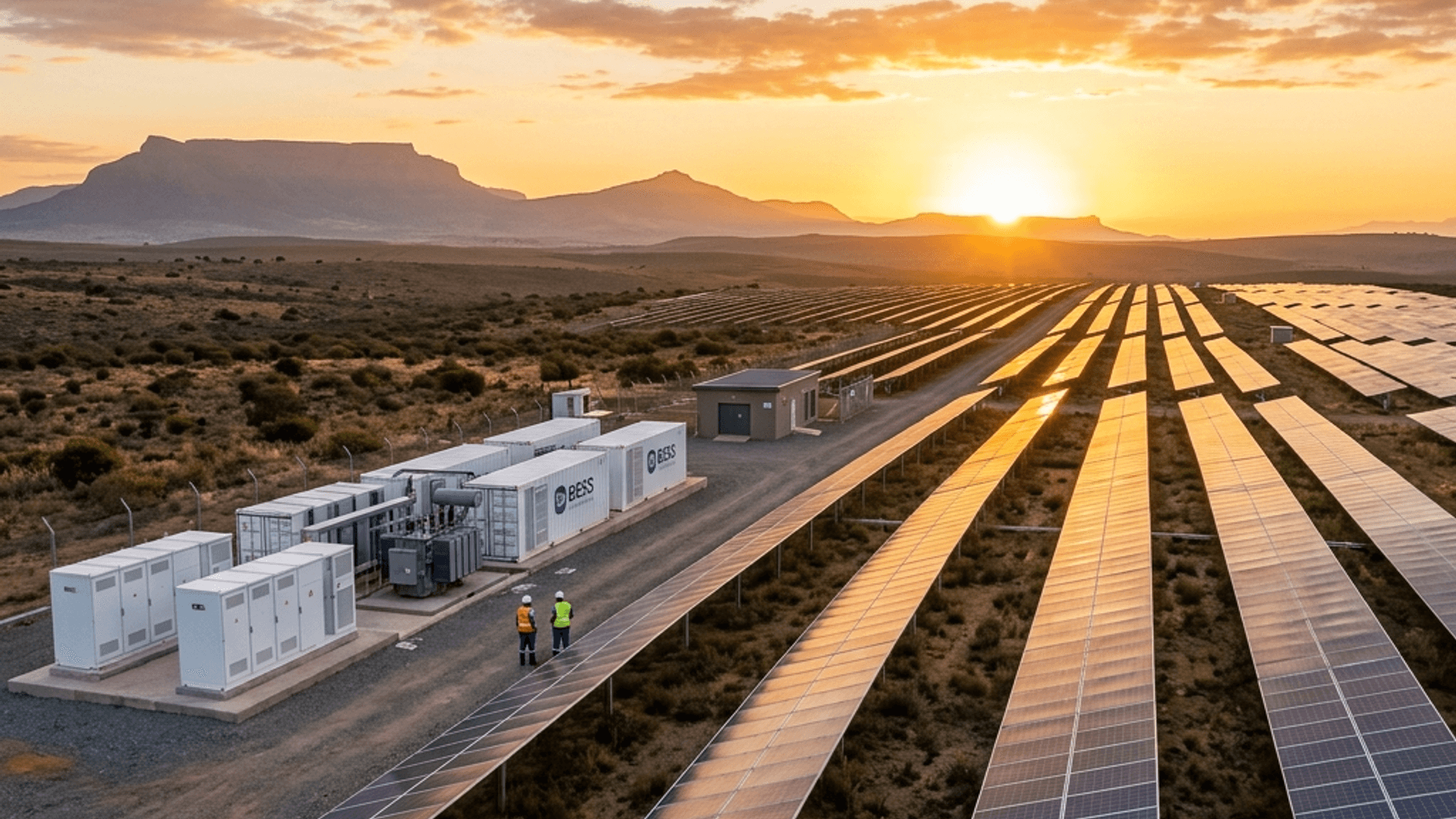
Utility-scale solar power plant and integrated battery energy storage cabinets, driving South Africa's energy transition.

Commercial Energy Storage Solutions

Solar Battery Storage for South African Businesses: Beat Load Shedding & Cut Peak Tariffs

Rakour delivers commercial-grade LiFePO4 solar battery storage systems engineered for South African businesses to stay powered through outages and slash peak time-of-use tariffs.

The South African Business Electricity Challenge: Load Shedding, Outages & Rising Tariffs

Why grid instability and rising time-of-use pricing make resilient power infrastructure essential for commercial operations across South Africa.

Why Grid Instability Still Threatens Business Continuity

Even as scheduled load shedding has eased, unplanned localised outages still disrupt South African businesses without warning. For retail, manufacturing, and cold storage, one blackout can halt production, spoil inventory, or stall point-of-sale systems.
 

The Real Cost of Unplanned Power Outages

Downtime is rarely just an inconvenience, it is a direct financial loss. A commercial battery storage system from Rakour keeps critical loads running automatically, turning an operational risk into a manageable, budgeted expense.


Rising Time-of-Use Tariffs and Peak Demand Charges

Municipal and Eskom tariffs now shift by time of day, penalising peak-period usage. An energy storage system lets companies shift consumption away from expensive peak windows, protecting margins as tariffs keep climbing.

How Solar + Battery Storage Works: From Sunlight to Backup Power

A closer look at how Rakour's integrated system captures, stores, and delivers power exactly when your business needs it most.

Solar Generation and Real-Time Load Support

During daylight hours, PV panels feed your building directly while surplus energy charges the battery bank. A well-configured solar to battery system prioritises live consumption, reserving stored power for outages or costly tariff periods.


Battery Management System and Intelligent Switching

Every Rakour unit relies on a built-in battery management system that monitors cell voltage, current, and temperature. It balances charging automatically, guards against over-discharge, and switches loads to stored power within milliseconds when the grid drops.


Grid-Tie Integration for Seamless Backup

Paired with compatible inverters, the system runs as a grid-tie or hybrid setup, drawing from solar, battery, or utility power as conditions change. Businesses stay online through load shedding, with no manual switching required.

Battery Chemistry & System Configuration: Choosing the Right Setup

Understanding LiFePO4 architecture, voltage classes, and modular design helps South African businesses match capacity to real operational demand.

Why LiFePO4 Battery Cells Outperform Lead-Acid for Commercial Use

Rakour's commercial units use lithium iron phosphate cells, chosen for thermal stability, longer cycle life, and higher usable depth of discharge than lead-acid alternatives. This durability lowers long-term cost per kWh for daily cycling through outages or tariff shifts.


High Voltage vs Low Voltage Rack Systems

Rakour offers both HV and LV rackable configurations, letting installers match voltage class to inverter compatibility and site requirements. A high voltage battery setup reduces current draw at higher capacities, simplifying cabling for larger installations.


Modular, Parallel-Ready Capacity for Scaling

Each battery module connects in parallel, up to fifteen units, so businesses can start with baseline backup and expand capacity as operations grow, without redesigning the electrical layout.

Peak Shaving & Time-of-Use Tariff Optimisation for Commercial Sites

How intelligent discharge scheduling turns stored solar energy into measurable, predictable savings on peak-period electricity charges.

Shifting Consumption Away From Peak-Rate Windows

A properly configured battery energy storage system charges during cheap off-peak hours and discharges automatically once tariffs rise, so your business draws less grid power exactly when electricity costs the most, every single day.


Reducing Demand Charges Through Automated Discharge

For sites billed on peak kW demand, the system shaves consumption spikes by supplying stored power the instant load surges, lowering the metered demand reading that sets a large share of the monthly bill.


Maximising Solar Self-Consumption With Smart Scheduling

Paired with a grid tie inverter, excess daytime solar is stored rather than exported at low feed-in rates, then released during evening peaks, raising self-consumption and shortening the overall system payback period.

Financial ROI & Payback: What Commercial Solar Battery Storage Really Costs and Saves

Understanding capital outlay, payback timelines, and available incentives helps South African businesses build a defensible investment case.

Calculating Payback Period for Commercial Systems

Payback depends on current energy costs, tariff structure, and downtime avoided. Businesses on high time-of-use tariffs typically see faster returns, since stored solar energy directly offsets the most expensive grid-purchased kilowatt-hours during peak billing periods.


Section 12B Tax Incentives for Renewable Energy Assets

South Africa's Section 12B allowance lets qualifying businesses write off a significant share of investment in renewable energy storage in the first year, materially shortening the effective payback period on a Rakour commercial installation.


Long-Term Savings Beyond the Initial Investment

Beyond monthly tariff savings, commercial solar system batteries reduce diesel generator reliance, lower maintenance costs, and protect margins from continued electricity price escalation over the equipment's full operational lifespan.

Which Industries Benefit Most from Commercial Battery Storage

Matching system capacity and backup duration to the specific load profile of your industry is critical to getting real value from solar and storage.

Retail, Hospitality & Point-of-Sale Continuity

For shops, restaurants, and hospitality venues, even short outages mean lost transactions and spoiled stock. Rakour's commercial solar system battery products keep till points, refrigeration, and lighting running through load shedding without interrupting trade.


Manufacturing, Cold Storage & Process-Critical Loads

Production lines and cold chains cannot tolerate unplanned shutdowns. Sized correctly, a commercial battery bank sustains motors, compressors, and control systems long enough to complete a safe shutdown or ride through the outage.


Off-Grid & Remote Site Applications

For sites beyond reliable grid reach, an off grid solar system paired with Rakour's rackable battery platform delivers continuous power independent of utility supply, suited to farms, mining camps, and remote commercial operations.

Safety, Certification & Compliance Standards for Commercial Battery Storage

Every Rakour system is engineered and certified to meet the safety, protection, and regulatory requirements demanded by commercial installations.

Built-In Protection Against Overcharge, Over-Discharge & Thermal Risk

Every Rakour commercial battery integrates a BMS with multi-layer protection covering over-current, high and low temperature, and voltage thresholds, automatically isolating the pack before conditions reach unsafe levels during continuous duty cycles.


Certified Rack-Mounted Design for Commercial Installations

A rack mount battery backup enclosure allows multiple units to stack safely within standard cabinets, simplifying fire-rated installation, ventilation planning, and inspection access required by South African commercial building and electrical codes.


Compliance Considerations for Grid-Connected Systems

Grid-tied commercial installations must satisfy local utility interconnection requirements and inverter compatibility standards. Working with a qualified installer ensures Rakour equipment is commissioned correctly and documented for insurance and municipal approval.

Energy Audit & Custom System Design Process

A precise system starts with understanding real consumption data, not estimated capacity, before any hardware is specified or installed.

Load Profiling and Peak Demand Assessment

Before recommending hardware, a proper energy audit reviews historical consumption data, identifies peak demand periods, and separates critical loads from non-essential ones, ensuring the final system reflects actual operational needs rather than assumptions.


Sizing the Right Solar Battery Storage System

Undersizing risks running out of power during extended outages, while oversizing wastes capital. Rakour engineers size each solar battery storage system against measured load data, battery chemistry, and desired backup duration for the site.


Custom Configuration and Installation Planning

Once sizing is confirmed, installers finalise inverter pairing, cabling, and enclosure layout. A well-documented solar energy storage system design simplifies commissioning, future capacity expansion, and ongoing maintenance for the business.

Frequently Asked Questions About Commercial Solar Battery Storage

Common questions South African businesses ask before investing in solar and battery storage systems.


How does commercial battery storage help during load shedding?

A commercial battery storage system switches to stored power the moment the grid drops, keeping equipment, refrigeration, and point-of-sale systems running through every stage of load shedding.


What is the typical payback period for a solar battery storage system?

Payback varies with tariff structure and energy costs, but businesses on high time-of-use tariffs often recover their investment within three to six years, especially with Section 12B incentives.

What is the difference between high voltage and low voltage LiFePO4 battery systems?

High voltage LiFePO4 battery systems reduce current draw at larger capacities, simplifying cabling for bigger sites, while low voltage systems suit smaller sites with flexible inverter options.


Can a battery energy storage system reduce peak demand tariffs?

Yes. A battery energy storage system discharges during peak-rate windows, shifting consumption to off-peak hours and lowering the metered demand charges on commercial electricity bills.


Do I need an energy audit before installing an off grid solar system?

Yes. An energy audit reviews consumption patterns and peak loads first, ensuring an off grid solar system is sized correctly, so you avoid running out of power or overpaying for unused capacity.

Ready to Cut Downtime and Peak Tariffs With Solar Battery Storage?

Ready to Cut Downtime and Peak Tariffs With Solar Battery Storage?

Talk to Rakour engineers about a solar battery storage system built for your load and tariff.