Rakour
Menu
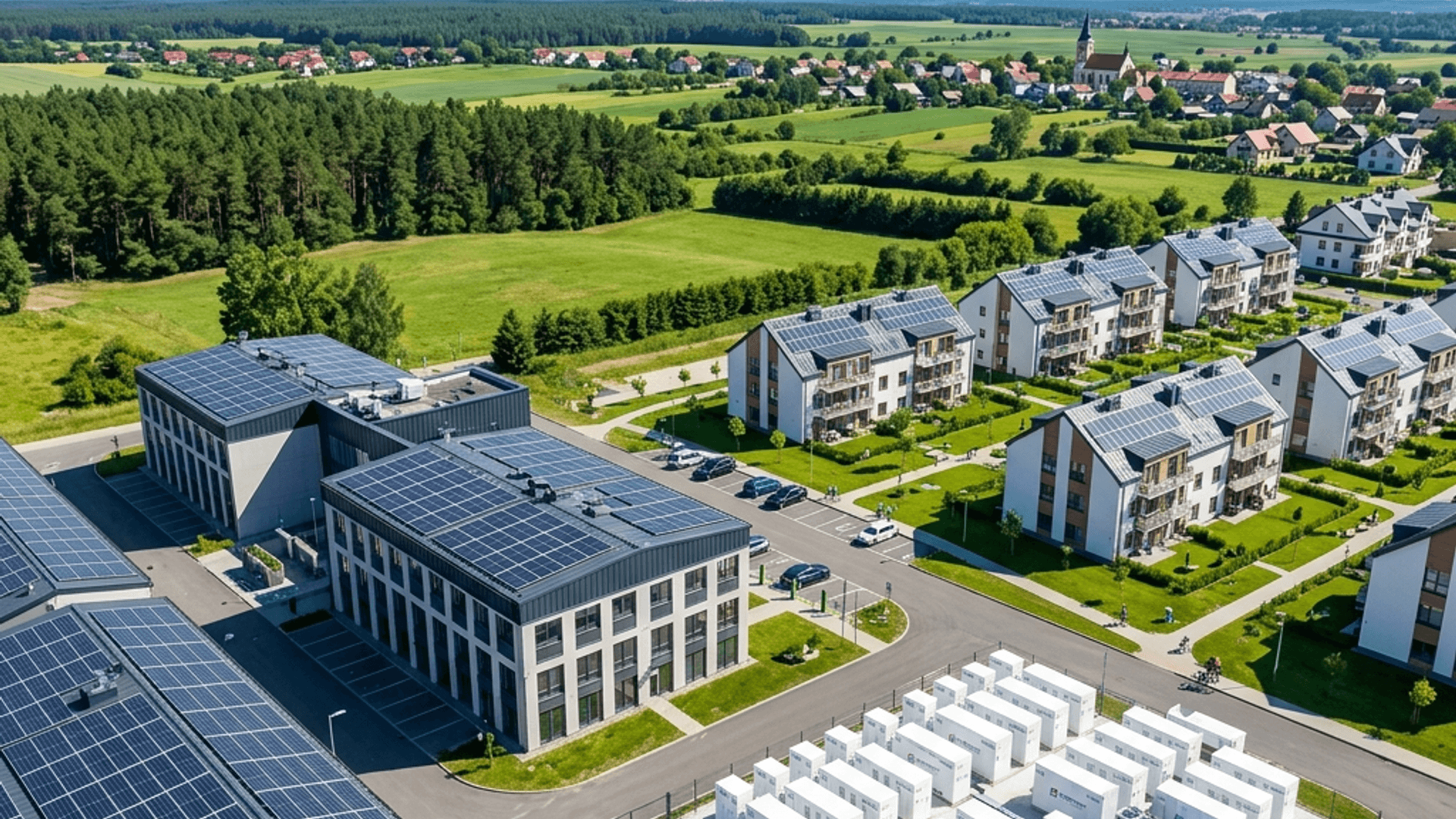
Commercial building with solar panels and integrated battery energy storage cabinets in Poland during a sunny morning.

Poland Energy Storage Market

Poland Solar Battery Storage Market: Growth, Policy & Investment Guide

Explore Poland's fastest-growing BESS market — driven by 20.7 GW of solar, €1B in subsidies, and 8–10 GW capacity target by 2030.

Poland's Energy Storage Market at a Glance

The strategic entry point for distributors, EPC contractors, and system integrators

The fastest-growing BESS sector in Central and Eastern Europe

Poland's energy storage systems market has entered a transformative phase. Four capacity market auctions between 2022 and 2025 contracted an estimated 5.1 GW of BESS capacity. With 89 pipeline projects totalling 12.5 GW and over €1 billion in state subsidies committed, Poland is now one of Europe's most active storage deployment destinations.
What makes the Polish market different from Western Europe

Unlike Germany or the UK, Poland's storage sector is early-stage — meaning ancillary service revenues remain elevated and saturation is years away. Developers entering now capture the highest margins before cannibalization reduces the opportunity window, making this the optimal entry point for distributors and EPC contractors alike.

Key figures investors and distributors need to know

Installed operational capacity stands at approximately 37 MW today. Modo Energy projects this to reach 8–9 GW by 2030 — a 200x increase in under six years. Poland's energy storage systems market is currently valued at USD 1.1 billion and growing rapidly across all segments.

Renewable Energy Expansion: The Root Driver of Storage Demand

Why every new solar gigawatt in Poland makes battery storage more urgent

Poland's solar boom is creating an urgent need for grid-balancing storage

Poland added 4.6 GW of solar in 2023 alone, pushing total installed PV capacity to 20.7 GW by end-2024 — a 28% year-on-year increase. Every new gigawatt of intermittent generation creates direct demand for a solar battery storage system to absorb surplus and release it when generation drops.

Curtailment is already becoming a critical grid problem

During Easter week 2025, grid operator PSE curtailed 77.5 GWh of renewable output in seven days — more than all curtailment recorded in 2023. Without sufficient solar energy storage infrastructure, curtailment is forecast to triple by 2040. This makes storage a grid necessity, not an optional upgrade.

Net-billing reform has made residential storage financially essential

Poland's shift from net-metering to net-billing means homeowners now export solar at ~0.30–0.40 PLN/kWh but pay ~1.30 PLN/kWh to import. Every prosumer has a direct financial incentive to store daytime generation rather than export it, driving consistent demand for Rakour's LV-series rack batteries across Poland's installer network.

Coal Phase-Out and Poland's Energy Security Transformation

How the structural shift away from coal is making grid storage indispensable

Decades of coal dependence are reshaping the entire power system

Coal powered 90% of Poland's grid in 2010. By 2024 that share had fallen to 56%, with full phase-out projected by 2040. As coal plants retire, the grid loses its traditional balancing capacity. An energy storage system now serves as the structural replacement — absorbing renewable variability and maintaining frequency stability across the national grid.

The Russia-Ukraine war accelerated Poland's push for energy independence

Poland ended gas imports via the Yamal pipeline by end-2022, ahead of the EU-wide embargo. This geopolitical shock elevated energy security to a national priority. A distributed battery storage fleet reduces dependence on imported fossil fuels and strengthens supply resilience across transmission and distribution networks.

2025 marked a structural turning point in Poland's energy mix

In 2025, Poland recorded its first month where renewable generation surpassed coal output — an irreversible structural shift. For Rakour distributors and EPC contractors, this confirms that demand for CE-certified energy storage system solutions will compound consistently through the decade ahead.

Learn Our Energy Storage Solutions

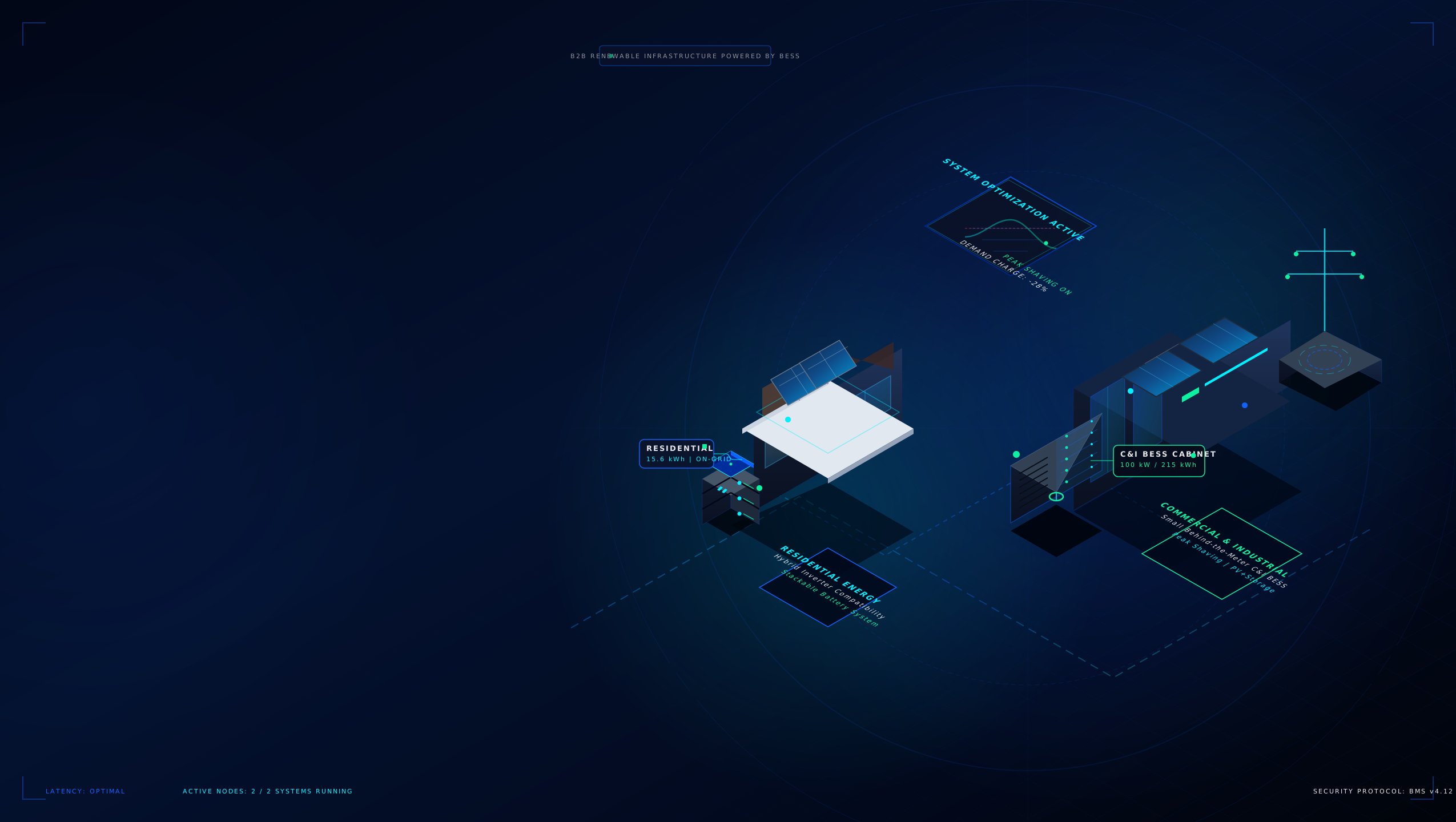
Tailor-made power backup with industry-leading versatility. Discover our customizable residential and commercial battery storage options, built to deliver reliable power, high compatibility, and excellent return on investment.

Explore Solutions

Government Subsidies and the Polish Policy Support Framework

The policy landscape every storage developer and distributor needs to understand

The €980 million NFOŚiGW programme is the market's primary growth catalyst

Poland's Ministry of Climate and Environment launched a €980 million subsidy scheme in early 2025, targeting over 5 GWh of new storage by 2028. Grants cover up to 45% of total investment costs — rising to 65% for qualifying projects. This is the single largest investment in renewable energy storage programme in Central and Eastern Europe.

Capacity market auctions provide long-term revenue certainty

Poland's capacity market contracted 4.4 GW of storage between 2022 and 2024. Winning projects receive 15–17-year contracts at fixed, inflation-indexed prices — providing the bankable revenue foundation that makes project financing achievable for developers and investors alike.

Mój Prąd supports household solar-plus-storage installations

The Mój Prąd programme offers up to 16,000 PLN per household for combined solar and storage systems. This scheme sustains consistent investment in renewable energy storage at the residential level, driving ongoing demand for Rakour's 5–16 kWh LV-series rack batteries across Poland's expanding prosumer base.

Capacity Market and Ancillary Services: How BESS Projects Generate Revenue

The four revenue streams powering Poland's battery storage economics

Ancillary services opened in June 2024 and revenues are exceptional

Poland's integration with the pan-European PICASSO platform in June 2024 opened FCR and aFRR markets to battery energy storage systems for the first time. Aurora Energy Research found Polish batteries would have generated some of Europe's strongest revenues between June 2024 and September 2025 — driven by elevated prices and low market saturation.

Four revenue streams work in combination for BESS operators

Polish projects can stack income from the capacity market, ancillary services, wholesale arbitrage, and the balancing market. Capacity contracts cleared at PLN 465.02/kW/year in 2025 — up 75% from 2024. Ancillary services are projected to remain the primary revenue source through approximately 2028 before the market matures.

Rakour's BMS enables precise ancillary service participation

FCR and aFRR participation demands millisecond-level response accuracy. Rakour's built-in battery management system with CAN/RS485/RS232 communication delivers the real-time control that grid operators require — giving operators a reliable ancillary services revenue stream from day one of commercial operation.

Three Market Segments Driving Poland's Storage Demand

Understanding where residential, C&I, and utility-scale storage fits

Residential: 37,000+ battery systems already installed nationwide

Poland's residential market is firmly established. Over 37,000 home energy storage systems totalling 550 MWh were deployed by 2024, driven by net-billing reform and rising electricity prices. Rakour's LV-series rack batteries, scalable from 5.12 kWh to 76.8 kWh per site, are purpose-built for this high-volume segment.

C&I: peak shaving and power resilience for businesses

Industrial parks, manufacturers, and data centres are deploying commercial battery storage to cut peak demand charges. C&I systems typically range from 100 kWh to several MWh. Rakour's HV-series supports 232V–980V configurations, delivering up to 225 kWh per cabinet and scaling to 900 kWh across four parallel cabinets.

Utility-scale: grid-connected projects exceeding 50 MW

Grid-scale projects dominate Poland's pipeline. PGE plans over 80 facilities exceeding 17,000 MWh over the next decade. These systems provide frequency regulation, capacity market services, and curtailment absorption — forming the backbone of Poland's transition to a renewable-led electricity generation structure.

LiFePO4: The Dominant Battery Technology in Poland's Storage Market

Why lithium iron phosphate has become the default chemistry for Polish BESS projects

Why LiFePO4 performs reliably across Poland's climate range

Lithium battery storage using LiFePO4 chemistry operates from -20°C to 60°C — critical where Polish winters fall below -10°C. Competing NMC chemistries degrade faster under thermal stress and cold. Rakour's LiFePO4 cells are validated for outdoor rack deployments without additional thermal management or enclosure modifications.

Cycle life and safety credentials Polish installers require

Rakour's cells deliver over 6,000 cycles at 90% DOD — more than 16 years of daily cycling. The chemistry eliminates thermal runaway risk, essential for residential installations near living spaces. For lithium battery storage requiring formal certification, Rakour's IEC62619 and UN38.3 compliance simplifies permitting across all Polish municipalities.

BMS enabling real-time cell performance and grid integration

Rakour's integrated BMS monitors voltage, current, and temperature at the cell level, balancing charge to maximise lifespan. CAN/RS485/RS232 communication enables integration with third-party inverters and EMS platforms, supporting standalone, co-located, and grid-adjacent BESS configurations across Poland.

Explore Our Products Line

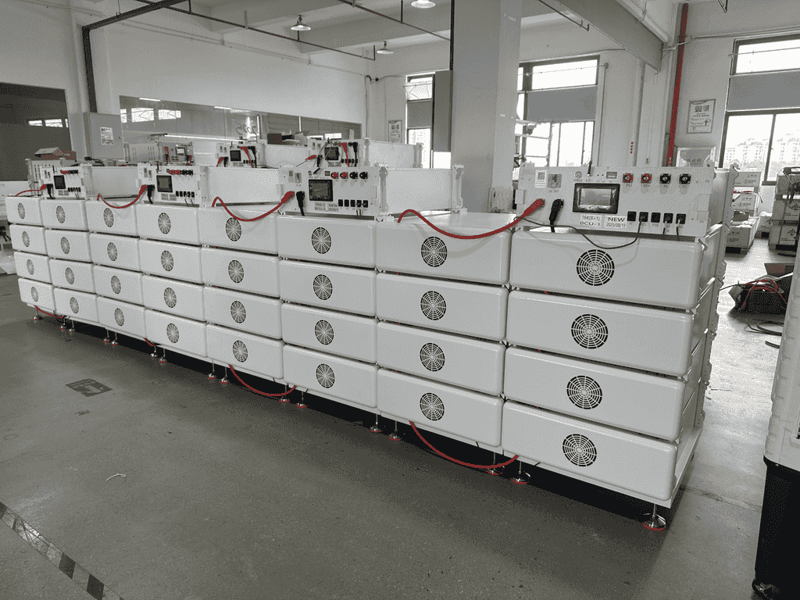
Rakour NSTLV low voltage LiFePO4 battery energy storage system assembly line with technicians in Xiamen manufacturing facility

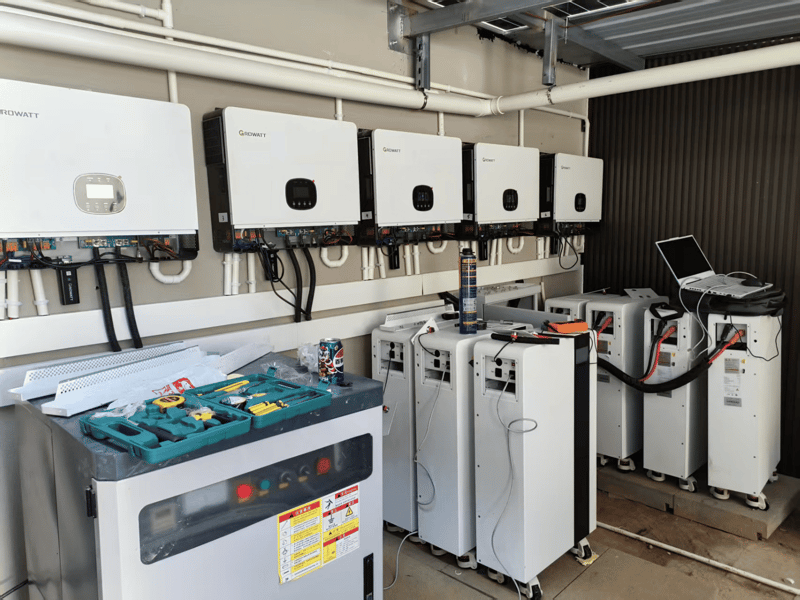
Explore Low-voltage residential energy storage products

Explore
Rakour high-voltage solar battery storage cabinet, modular expansion up to 225kWh for home and small commercial and industrial C&I energy storage.

Explore High-voltage C&I storage products

Explore

Grid Connection Rules and Regulatory Challenges in Poland

What developers, installers, and investors must understand before committing capital

Poland's grid backlog: the market's primary bottleneck

Grid conditions have been issued for approximately 240 GW — including 90 GW for storage — but a large inactive share freezes available capacity. The 2026 Grid Act introduces milestone deadlines and cable-pooling reforms. For residential battery storage installers, the new electronic application system cuts processing time and improves planning certainty significantly.

Permitting and zoning risks for BESS developers

Poland lacks dedicated zoning rules for battery storage. Some municipalities permit BESS under warehouse classifications — legally uncertain. Environmental assessments may apply for projects exceeding 0.5 hectares. Full construction permits are mandatory for residential battery storage and all commercial installations as of 2025.

Regulatory reforms improving conditions from 2025 onwards

Poland's TSO introduced fast-track connection procedures from August 2025. The Grid Act prohibits double grid fees for charge and discharge cycles. Operators must now publish available connection capacities, giving Rakour's distributor and EPC partners improved site selection visibility and investment planning confidence.

Investment Landscape and Key Players in Poland's BESS Market

Who is building Poland's storage pipeline and where the capital is flowing

International IPPs and state utilities dominate the pipeline

R.Power leads at 1.7 GW across nine projects. Greenvolt secured 1.2 GW in the 2023 auction — the largest single allocation in any Polish round. LG Energy Solution partnered with PGE for a major utility-scale facility. These energy storage companies are reshaping the competitive landscape, with 9 projects confirmed in active construction as of 2026.

NFOŚiGW subsidies have attracted 172 projects to the programme

A total of 172 projects secured PLN 4.15 billion with a 2028 commissioning deadline. As leading energy storage companies accelerate procurement, CE-certified LiFePO4 rack systems from manufacturers like Rakour become critical to meeting project timelines without supply disruption.

What Poland's investment momentum means for Rakour distributors

As utility-scale projects advance, demand flows downstream to C&I and residential segments. Rakour's OEM options, 24-hour quotation turnaround, and flexible MOQ terms position distribution partners to capture installation volumes across all three of Poland's storage market segments simultaneously and efficiently.

Poland's Energy Storage Market Outlook: The Road to 2030

Capacity projections, execution risks, and the case for early supply partnerships

Projections: a 200x increase in installed BESS capacity by 2030

Poland's BESS stood at 37 MW in early 2026. Modo Energy projects 8–9 GW by 2030, backed by 11 GW of capacity contracts. Poland's solar battery storage market is set to grow at a CAGR of 27.85% through 2030, with 2025 installations reaching 543 MW.

Attrition and grid access: execution risks that matter most

European BESS attrition of 20–30% means not all contracted capacity will be delivered. Grid connection constraints and permitting delays remain primary risks. EPC partners and distributors who establish supply relationships early are best positioned to serve projects that reach commercial operation.

Why early supply partnerships with Rakour compound in value

The solar battery storage opportunity in Poland compounds annually. Rakour's CE-certified LiFePO4 systems — from 5 kWh residential racks to 225 kWh commercial units — are inverter-compatible and deployment-ready. Early partners secure preferential pricing, priority allocation, and dedicated technical support through Poland's build-out years.

Frequently Asked Questions About Poland's Battery Storage Market

Expert answers to the top questions from distributors, EPC installers, and storage investors.

What is driving growth in Poland's solar energy storage system market?

Poland's 20.7 GW solar capacity creates grid imbalance without storage. Net-billing reform and a €980M subsidy programme are the two primary demand drivers accelerating nationwide deployment.

Which battery chemistry dominates Poland's BESS market?

LiFePO4 dominates Poland's BESS market. It operates from -20°C to 60°C, delivers 6,000+ cycles, eliminates thermal runaway risk, and meets CE, IEC62619, and UN38.3 certification standards.

How does utility scale battery storage generate revenue in Poland?

Polish BESS projects stack revenue from four sources: capacity market contracts (15–17 years, inflation-indexed), FCR/aFRR ancillary services, wholesale energy arbitrage, and balancing market fees.

What are the key regulatory challenges for home battery storage system projects?

Poland lacks dedicated BESS zoning rules. Developers face unclear local planning laws, potential environmental assessments, and mandatory full construction permits for all installations as of 2025.

What renewable energy storage capacity is Poland targeting by 2030?

Poland targets 8–9 GW of BESS capacity by 2030 — up from 37 MW in early 2026. Growth is supported by €1B in state subsidies, 11 GW of contracted capacity, and a market CAGR of 27.85%.

Ready to Supply Poland's Fastest-Growing Energy Storage Market?

Ready to Supply Poland's Fastest-Growing Energy Storage Market?

Rakour's CE-certified LiFePO4 systems are stocked and ready. Request your quote in 24 hours.