Rakour
Menu
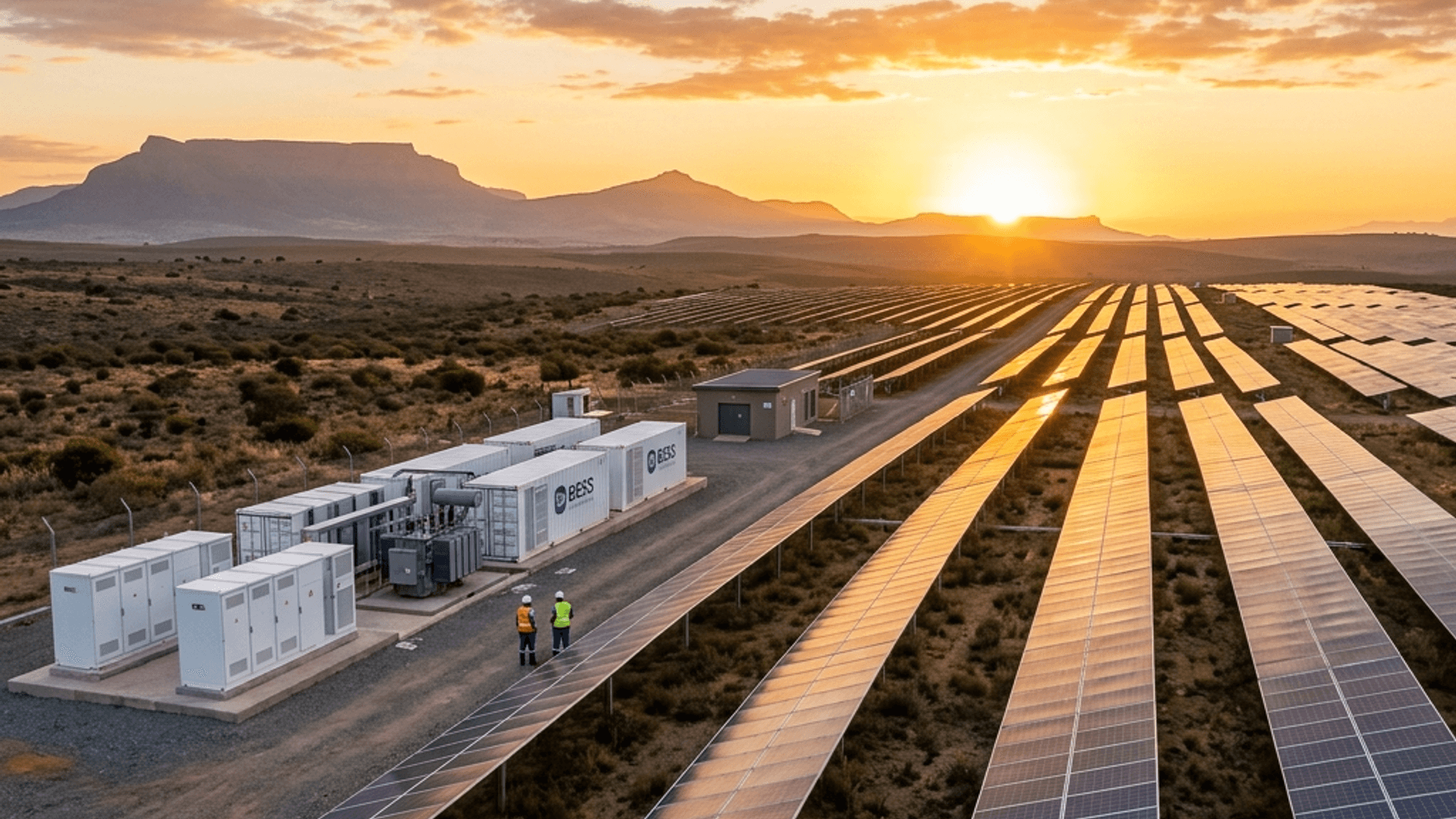
Utility-scale solar power plant and integrated battery energy storage cabinets, driving South Africa's energy transition.

South Africa Market · Solar Energy Storage

Solar Battery Storage Solutions for South Africa's Energy Market

Built for load shedding, high temperatures, and off-grid demands — reliable LiFePO4 systems for homes and businesses across South Africa.

South Africa's Energy Crisis Background & Storage Demand Overview

Why a decade of grid failures has made energy storage essential for South African homes and firms.

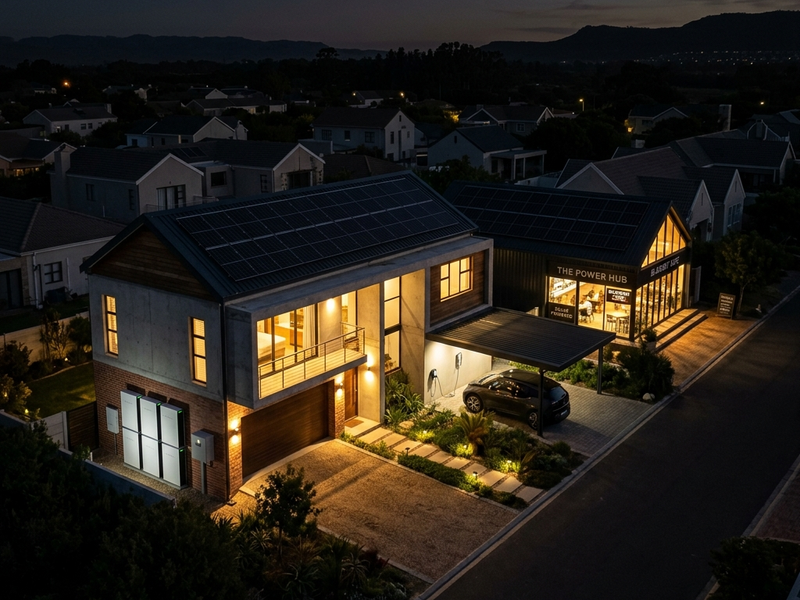
Residential solar energy storage system (ESS) providing emergency backup power during a grid blackout in South Africa.

Why energy storage systems have become a necessity, not a luxury, in South Africa

South Africa's electricity crisis has persisted for over a decade, driven by Eskom's aging coal fleet, structural underinvestment, and insufficient generation capacity. In 2023, the country endured 335 days of load shedding, with over 16.6 million MWh removed from the national grid. The cumulative economic cost reached ZAR 224 billion, devastating businesses and households across every province.
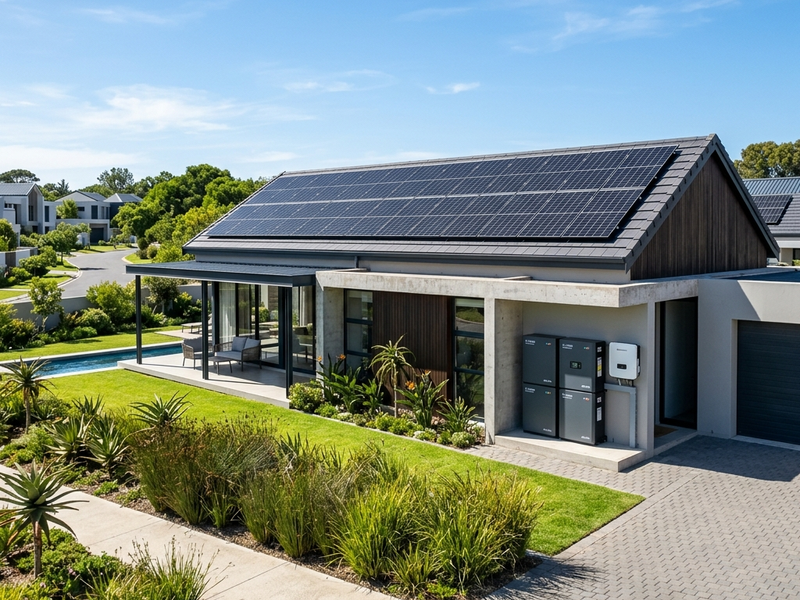
Solar battery storage storing daytime generation for backup power during evening load shedding in South Africa.

Scale of Private Energy Storage Adoption

In direct response, South Africans rapidly shifted to self-generation. Rooftop solar PV capacity surged from 1.2 GW in 2021 to 6.1 GW by end of 2024 — a 474% increase within three years. Energy storage systems became essential partners to solar installations, enabling households and businesses to store daytime solar generation and deploy it during evening load shedding windows.

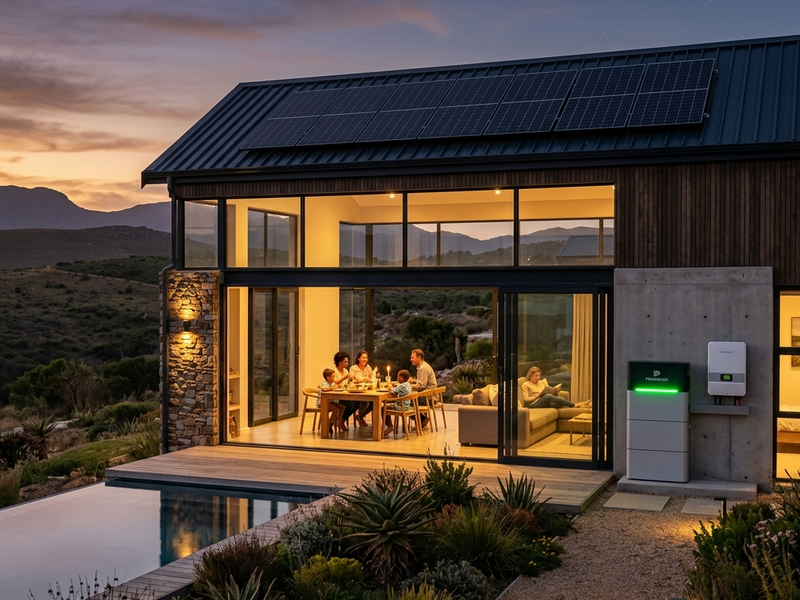
Home solar energy storage system providing continuous power during unplanned local grid outages in South Africa.

Why Storage Demand Persists Despite Grid Improvements

Although scheduled load shedding eased to 69 days in 2024 and just 12 days through mid-2025, the grid remains structurally fragile. Unplanned local outages reached 91,934 incidents in 2025, costing households between 73 and 132 hours of lost power monthly. Demand for reliable energy storage systems has not declined — it has matured from emergency backup into a long-term energy independence strategy.

South Africa BESS Market Size & Growth Data

South Africa leads Africa in battery storage — here is what the market data means for buyers today.

The numbers behind Africa's most advanced battery energy storage system market

South Africa's battery energy storage system market was valued at USD 3.73 billion in 2024 and is projected to reach USD 12.82 billion by 2032, growing at a CAGR of 16.78%. The country holds 41.6% of the entire African battery market, positioning it as the continent's most mature and strategically important storage economy by revenue.

Residential Segment Drives the Fastest Growth

The residential energy storage segment leads expansion with a CAGR of 17.39% through 2032. In 2024, residential installations generated USD 1.41 billion in revenue. Homeowners facing persistent outages are prioritising energy independence, accelerating demand for scalable LiFePO4-based systems ranging from 5 kWh entry-level units to 16 kWh whole-home configurations across all major provinces.

Utility-Scale Projects Validate Long-Term Demand

At the grid level, South Africa's BESIPPPP programme delivered 1,744 MW across three procurement windows in 2025. Africa's largest standalone BESS — the 153 MW / 612 MWh Red Sands project — reached financial close in July 2025 with ZAR 5.4 billion in debt financing. This institutional-scale activity confirms durable, cross-segment commitment to battery energy storage system infrastructure in South Africa for the decade ahead.

Load Shedding as the Core Driver for Solar Battery Storage

Load shedding stages define exactly how much backup capacity every South African household needs.

Understanding what whole house battery backup must realistically deliver in South Africa

South Africa operates an eight-stage load shedding system, where each stage removes 1,000 MW of demand through rolling blackouts lasting two to four hours per cycle. During Stage 6, households can lose up to 12 hours of grid power daily. For homes relying entirely on Eskom supply, that means spoiled food, disabled security systems, and interrupted business operations.

What a Whole House Battery Backup Must Cover

A functional whole house battery backup for a typical South African home must power refrigeration, lighting, Wi-Fi routers, security cameras, and phone charging simultaneously. This requires a minimum of 5 kWh usable capacity for partial backup, or 10–16 kWh for full-home coverage during extended Stage 4–6 outages. RAKOUR's LiFePO4 rack systems, scalable from 5.12 kWh to 16 kWh, are engineered specifically for these scenarios.

Why Solar Battery Storage Is the Preferred Solution

Generator alternatives carry recurring fuel costs averaging R1,500–R3,000 per month during heavy shedding periods. By contrast, solar battery storage systems charge from rooftop panels at zero marginal cost and discharge silently without fuel logistics. RAKOUR systems support up to 15 parallel units, allowing households to expand capacity as their energy needs evolve.

South Africa's Climate Conditions & Battery System Performance

High irradiance and extreme heat make battery chemistry the most critical decision in South Africa.

Why LiFePO4 batteries are the right chemistry for South Africa's high-temperature environment

Why LiFePO4 batteries are the right chemistry for South Africa's high-temperature environment

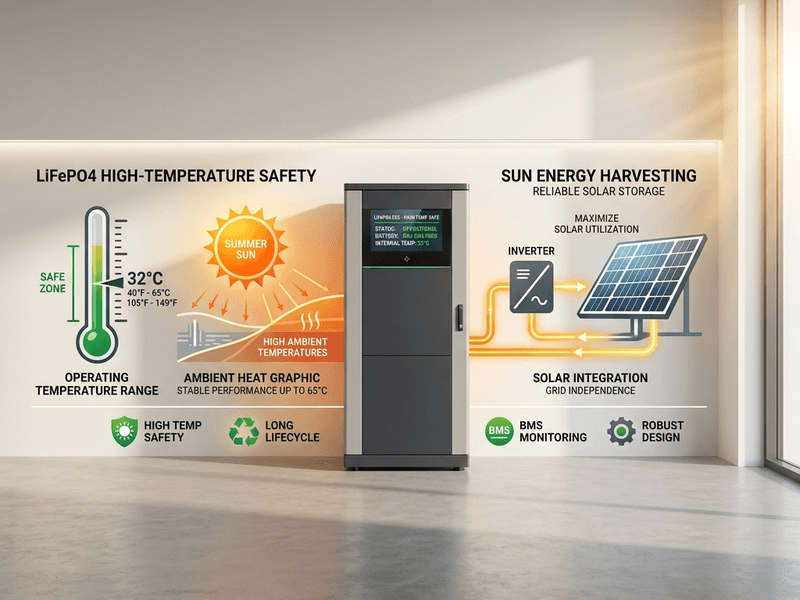
South Africa receives over 2,500 hours of sunshine annually — one of the highest averages globally — making it an ideal market for solar-coupled storage. However, high ambient temperatures in provinces like Limpopo, Northern Cape, and North West regularly exceed 40°C in summer, placing significant thermal stress on battery systems not designed for such conditions.

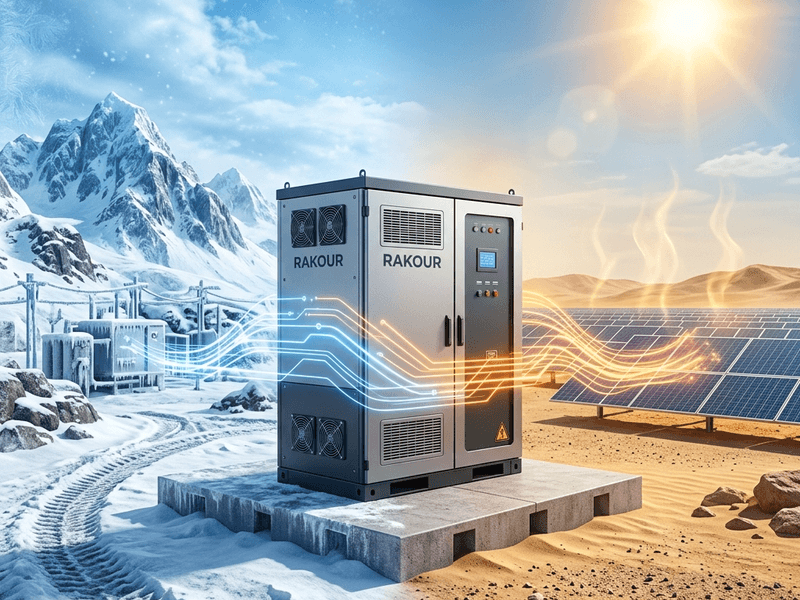
RAKOUR LiFePO4 battery storage cabinet with wide operating temperature range from -20C to 60C

LiFePO4 Batteries and Thermal Stability

LiFePO4 batteries offer a critical advantage in South Africa's climate. Unlike NMC chemistry, lithium iron phosphate cells are inherently stable at high temperatures, with no thermal runaway risk up to 60°C. Operating temp LiFePO4 range for RAKOUR units spans -20°C to 60°C for discharge, ensuring performance is maintained year-round across coastal, highveld, and semi-arid environments without active cooling requirements.

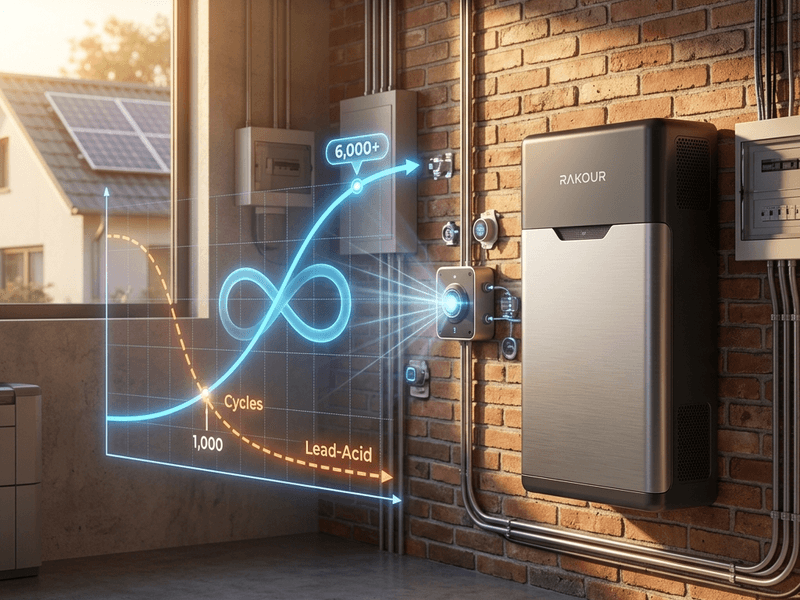
RAKOUR LiFePO4 battery lifespan of 6000 cycles at 90 percent DoD

LiFePO4 Battery Life in Daily Cycling Condition

LiFePO4 battery life in solar-cycling applications is a key investment consideration. RAKOUR's cells are rated at ≥6,000 cycles at 90% depth of discharge, translating to over 16 years of daily use. Lead-acid alternatives typically deliver 500–1,000 cycles under similar conditions. For South African households cycling batteries daily to offset load shedding, LiFePO4 chemistry delivers measurably superior total cost of ownership.

Learn Our Energy Storage Solutions

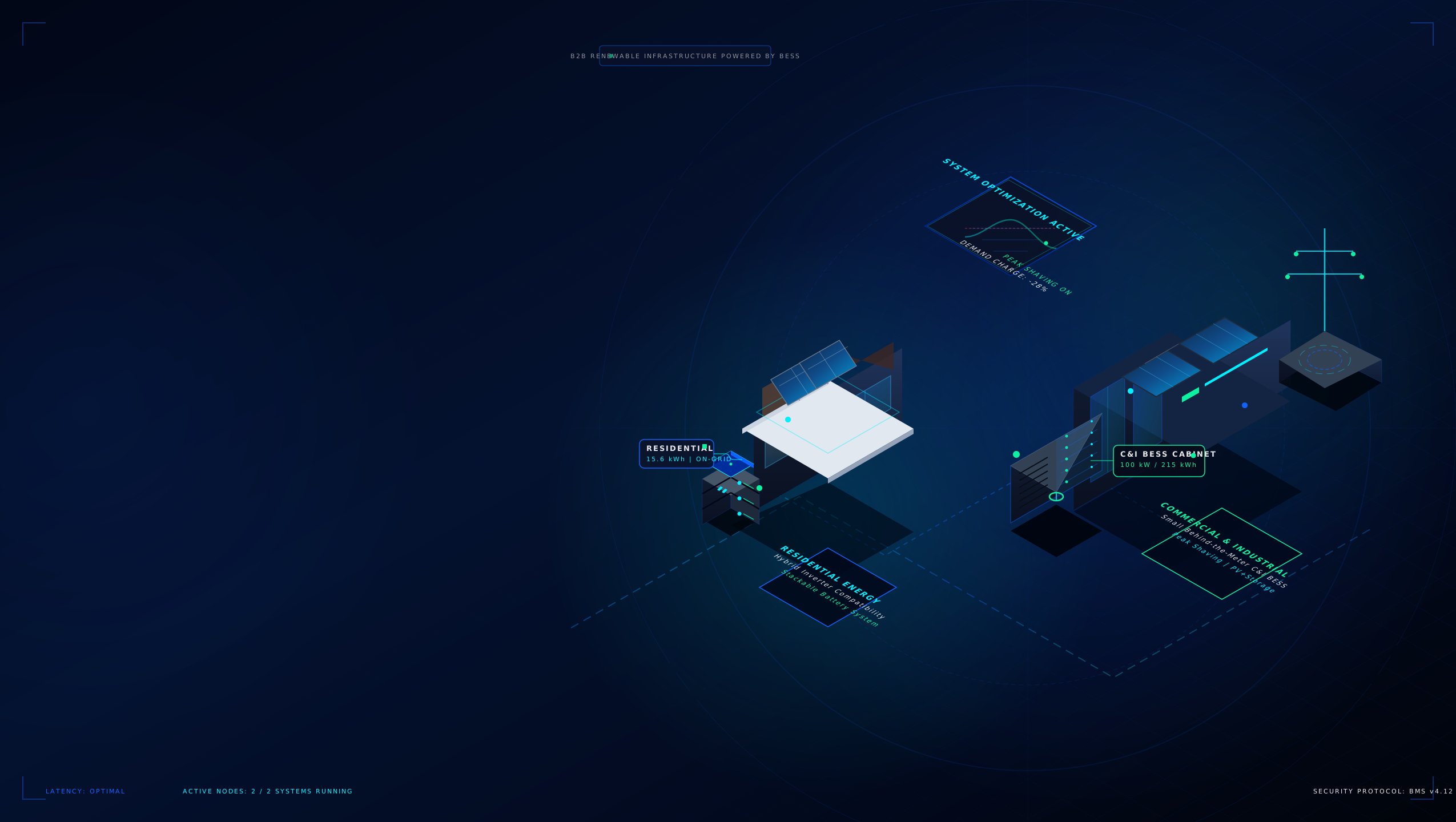
Discover Rakour Energy's safe, scalable, and high-efficiency energy storage solutions. From home backup power to commercial microgrids, our premium LiFePO4 battery systems offer seamless inverter compatibility and exceptional cost-efficiency to accelerate your sustainable energy transition.

Explore Solutions

South Africa Residential Storage Capacity Planning Guide

Choosing the wrong capacity is the costliest mistake in a South African solar installation project.

How to accurately size a solar battery storage system for South African load shedding conditions

Selecting the correct storage capacity is the most consequential decision in any South African solar installation. Undersizing leaves critical loads unprotected during extended outages; oversizing increases upfront cost without proportional benefit. An accurate load audit — measuring watt-hours consumed by essential appliances over a 24-hour period — is the essential starting point.

How to Size a Solar Battery Storage System

A reliable solar battery storage system for partial backup (refrigerator, lights, Wi-Fi, security) requires 5–7 kWh of usable capacity. Full-home backup including air conditioning circuits demands 14–16 kWh. RAKOUR's modular rack architecture — available in 5.12 kWh, 10.2 kWh, and 16 kWh configurations — allows installers to precisely match system size to audited load requirements without overprovisioning.

Batteries for Solar Power Storage: Off-Grid vs Hybrid

The choice between a fully off-grid solar system and a hybrid grid-tied setup fundamentally changes sizing logic. In off-grid configurations, batteries for solar power storage must cover multiple days of autonomy, typically requiring 2–3× daily consumption capacity. Hybrid systems draw from the grid as backup, allowing leaner battery sizing. RAKOUR supports both architectures through its LV (48V) and HV (232V–979V) product ranges, giving installers flexibility across residential and light commercial projects.

South Africa Electricity Pricing & Solar Battery Storage Economics

Eskom tariff hikes and zero fuel costs make home battery storage South Africa's top ROI decision.

Why investment in renewable energy storage now makes financial sense for South African homeowners and businesses

Eskom's 18.65% tariff hike in 2024, combined with above-inflation annual increases across the previous decade, has fundamentally reshaped the financial case for home energy storage in South Africa. Persistently rising electricity costs now mean that investment in renewable energy storage routinely delivers payback periods well below five years for most South African residential and commercial property owners.

Calculating ROI on a RAKOUR Home Battery System

A 10 kWh RAKOUR LiFePO4 system eliminates approximately R1,800–R2,500 per month in combined generator fuel costs and peak-tariff electricity consumption. At current market pricing, most residential installations recover their full capital outlay within 36–48 months. With a rated cycle life of ≥6,000 cycles, RAKOUR systems continue generating verified savings for well over a decade beyond the initial payback point.

Time-of-Use Tariffs and Daily Peak Shaving Benefits

South Africa's TOU tariff structure charges significantly higher rates during morning and evening peak demand windows. Home energy storage systems configured for peak shaving automatically discharge during these windows, reducing costly grid consumption. RAKOUR's BMS supports TOU schedule programming via CAN/RS485, enabling full compatibility with Sunsynk, Deye, and Growatt inverter platforms for automated daily energy cost arbitrage.

South Africa Solar Storage Compliance & Installation Certification Requirements

Every grid-connected system in South Africa must meet SANS, NRS 097, and OHS Act requirements first.

What battery energy storage systems must meet before they can legally connect to the South African grid

All grid-connected battery energy storage systems in South Africa must comply with a layered regulatory framework. Installations require a Certificate of Compliance (CoC) issued under the Occupational Health and Safety Act, confirming adherence to SANS 10142-1 wiring standards. Inverters must be configured to NRS 097-2-1:2024 protection parameters — not factory defaults — before grid connection is permitted.

SSEG Registration: What Installers Must Submit

Small-Scale Embedded Generation (SSEG) registration is mandatory for all grid-interactive systems. Required documentation includes a valid CoC, an NRS 097 inverter test certificate, and a basic SSEG installation test report. Since October 2025, a DoEL-registered electrical contractor — rather than an ECSA Professional Engineer — may sign off residential systems, reducing compliance cost and timeline for homeowners.

How RAKOUR Products Support Compliance

RAKOUR battery energy storage systems carry CE, RoHS, MSDS, and UN38.3 certifications. Each unit ships with CAN, RS485, and RS232 communication ports, ensuring compatibility with NRS 097-compliant inverters used across South African installations. RAKOUR's built-in BMS enforces protection thresholds for overcharge, over-discharge, overcurrent, and thermal events — meeting both SANS 10142-1 safety requirements and SSEG technical standards.

South Africa Renewable Energy Policy & Government Procurement Programmes

Policy programmes and tax incentives are actively accelerating storage adoption across South Africa.

How national policy frameworks are driving solar energy storage demand at every market level

South Africa's policy environment is one of the strongest drivers of solar energy storage demand on the continent. The Electricity Regulation Amendment Act (ERAA) of 2024 established a competitive wholesale electricity market and removed licensing barriers for private generators below 100 kW. This reform directly accelerated residential and commercial storage adoption by enabling simpler grid access for self-generators.

REIPPPP and BESIPPPP: Creating Market Confidence

The Renewable Energy Independent Power Producer Procurement Programme attracted ZAR 200 billion in private investment across multiple bid windows, establishing South Africa as a bankable renewable market. The dedicated BESIPPPP awarded 1,744 MW of dispatchable storage in 2025, sustaining demand across the entire solar energy storage supply chain — including battery storage system companies serving residential installers nationwide.

Section 12B Tax Incentive for Commercial Buyers

Under Section 12B of the Income Tax Act, commercial and industrial buyers can write off 100% of qualifying renewable energy assets — including battery storage — in the first year of installation. This incentive significantly compresses payback periods for C&I projects and makes larger RAKOUR HV configurations increasingly attractive to South African businesses seeking both energy security and fiscal efficiency.

High-Voltage vs Low-Voltage Battery Systems for South Africa

Load size, inverter type, and expansion goals decide whether LV or HV architecture suits your site.

Choosing between off-grid inverter and hybrid architectures: how RAKOUR's LV and HV ranges serve different South African applications

South African installers must choose between low-voltage (LV) 48V systems and high-voltage (HV) stacked configurations based on application scale, inverter compatibility, expansion goals, and on-site wiring constraints. This decision directly affects conversion efficiency, cable sizing, overcurrent protection requirements, and the maximum capacity the installation can grow to over its service lifetime.

Learn About Inverter Compatibility

Low-Voltage LV Systems and Pure Sine Wave Inverter Compatibility

RAKOUR's LV range operates at 51.2V nominal, connecting to popular hybrid inverters including Sunsynk, Deye, and Victron. A standard pure sine wave inverter in the 3–8 kW class pairs with a single RAKOUR LV unit, delivering seamless load transfer in under 20 milliseconds. Up to 15 units can be parallel-connected, scaling capacity from 5.12 kWh to 78 kWh within one system.

Explore Low Voltage Products

High-Voltage HV Systems and Off-Grid Inverter Pairing

RAKOUR's HV range stacks 5–17 modules in series, achieving operating voltages from 232V to 979V. Reduced current draw lowers cable losses significantly across longer installation runs. An off grid inverter rated at 50–80 kW paired with a RAKOUR 51.2V314Ah HV stack delivers 16 kW continuous output per module group, supporting complete business continuity during extended grid outages without generator dependency.

Explore High Voltage Products

Key Challenges & Buyer Guidance for South Africa's Storage Market

Certification gaps and weak installers are the two biggest risks in South Africa's storage market.

What to verify before purchasing solar battery storage systems in South Africa's rapidly expanding but uneven market

South Africa's rapid storage expansion has introduced significant quality variation across the market. Unbranded lithium-ion packs with uncertified BMS units have caused residential fires, prompting regulators to mandate IEC 62619 compliance from 2025 onward. Buyers evaluating solar battery storage systems must verify product certifications — not assume that a competitive price reflects equivalent safety performance.

Verifying Battery Safety Standards and Certifications

Reputable solar battery storage systems carry CE, UN38.3, RoHS, and IEC 62619 certifications. RAKOUR products meet all four standards and ship with documented BMS protection thresholds covering overcharge, over-discharge, overcurrent, and thermal fault conditions. Installers should request the full certification package and confirm alignment with SANS 10142-1 and CoC requirements before commissioning any new system.

Installer Competency and Ongoing Remote Monitoring

Installer quality varies significantly across South Africa's 278 municipal jurisdictions. Only DoEL-registered electrical contractors may issue Certificates of Compliance for lithium iron phosphate battery safety-critical residential installations. RAKOUR's built-in Wi-Fi module enables remote monitoring via mobile app, giving owners real-time visibility into state-of-charge, cycle count, and fault alerts — providing an independent performance check well beyond the initial installation sign-off.

Frequently Asked Questions About Solar Battery Storage in South Africa

Everything South African homeowners and installers need to know about solar battery storage.

How many kWh does a solar battery storage system need to cover Stage 6 load shedding?

Stage 6 removes up to 12 hours of grid power daily. A partial backup covering a fridge, lights, and Wi-Fi needs 5–7 kWh. Full-home coverage typically requires 10–16 kWh of usable capacity.

Are LiFePO4 batteries safe to use in South Africa's high-temperature climate?

Yes. RAKOUR LiFePO4 batteries operate safely from -20°C to 60°C discharge temperature. Unlike NMC cells, LiFePO4 chemistry carries no thermal runaway risk, making it ideal for South Africa.

What certifications should residential energy storage systems carry in South Africa?

Look for CE, UN38.3, RoHS, and IEC 62619. All RAKOUR units ship with these certifications plus a full BMS covering overcharge, over-discharge, overcurrent, and thermal fault protection.

Can RAKOUR battery energy storage systems work with Sunsynk or Deye inverters?

Yes. RAKOUR units use CAN and RS485 communication ports, ensuring full compatibility with Sunsynk, Deye, Growatt, and Victron inverters commonly installed across South African residential projects.

What is the typical payback period for home energy storage in South Africa?

Most RAKOUR home systems achieve payback within 36–48 months. Rising Eskom tariffs and eliminated generator fuel costs combine to deliver strong returns well within the 10-year warranty period.

Ready to Secure Reliable Power for Your South African Home or Business?

Ready to Secure Reliable Power for Your South African Home or Business?

Tell us your load shedding stage and daily kWh needs — we will size the right RAKOUR system.