
Rakour
Menu
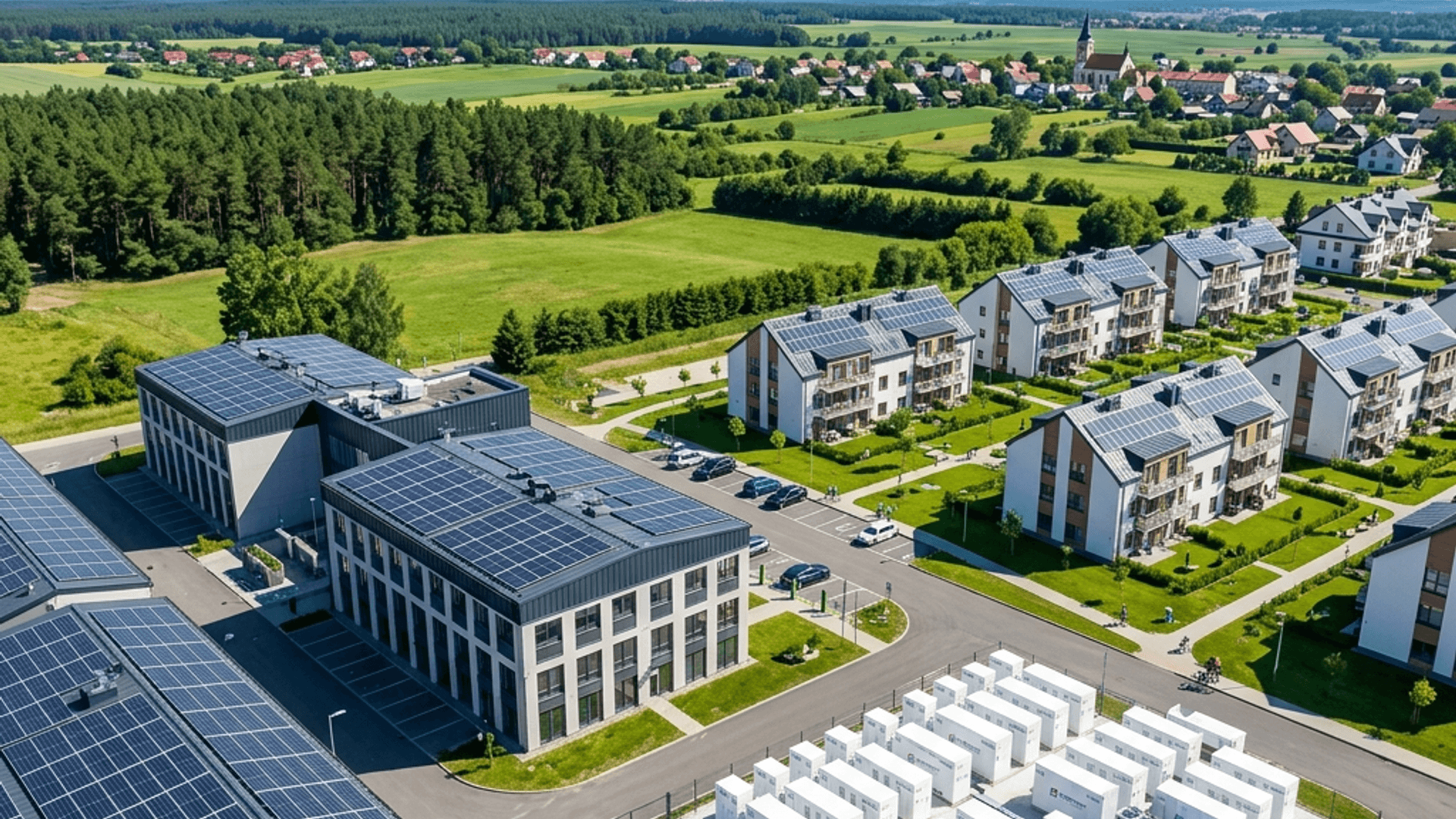
Commercial building with solar panels and integrated battery energy storage cabinets in Poland during a sunny morning.

POLAND C&I ENERGY STORAGE GUIDE

Commercial Battery Storage Solutions for Poland's C&I Energy Market

Explore high-voltage and low-voltage commercial battery storage systems engineered for Poland's industrial parks, manufacturing plants, and grid-compliant C&I energy projects.

Understanding Poland's C&I Energy Storage Market

Rising industrial tariffs and grid curtailment are pushing Polish factories toward battery storage as a core operating asset, not merely optional backup for rare emergencies.

Why Industrial Electricity Costs Keep Climbing

Poland's commercial and industrial tariffs have climbed sharply as coal capacity retires while renewable output stays uneven across seasons. Demand charges now often outweigh raw consumption costs, pushing operators to look beyond the grid alone for predictable, controllable electricity expenses.
Grid Instability Behind Rising Demand

PSE has curtailed record volumes of renewable power in recent seasons, exposing factories to voltage dips and short unplanned outages. On-site capacity absorbs these swings, shielding production lines from instability that is now a routine feature of Poland's transmission network.

From Utility-Scale to Factory-Level Storage

Early Polish deployments centered on utility scale battery storage built for grid balancing at the transmission level. The market is shifting toward site-level battery energy storage system installs, and RAKOUR's HV and LV series bring that same LiFePO4 reliability down to single-facility use.

Navigating Poland's Storage Subsidy Landscape

National and EU-backed funding programs are reshaping how commercial operators finance new equipment, though eligibility rules and application deadlines vary sharply by project scale.

NFOŚiGW Grants for Large-Scale Projects

NFOŚiGW's capital grant scheme covers battery storage system projects at or above 2 MW and 4 MWh, offering up to 65% of investment costs for smaller enterprises. RAKOUR's HV cabinets, scalable to 900 kWh in parallel, help operators structure equipment plans around these funding thresholds.

Where Mid-Sized C&I Sites Fit

Facilities below the large-scale grant threshold can still access enterprise energy-efficiency funding tied to renewable generation paired with storage. RAKOUR's LV rack series supports smaller, phased deployments that keep mid-sized manufacturers eligible for these narrower but still valuable funding programs.

Capacity Market Contracts as Revenue

Beyond one-time grants, Poland's capacity market auctions offer fifteen to seventeen-year fixed-price contracts. Pairing a battery storage system with these contracts gives C&I operators a second, predictable revenue stream layered on top of direct energy cost savings each month.

Meeting PSE Grid Code Requirements

Every commercial storage installation connected to Poland's medium or high-voltage network must satisfy PSE's technical codes before local grid operators approve commissioning.

Voltage and Frequency Ride-Through Rules

PSE requires storage systems to stay connected during short voltage and frequency disturbances rather than tripping offline. RAKOUR's HV series, rated across 232 to 980 volts, is engineered with ride-through behaviour that supports compliant grid-connection testing procedures during commissioning.

Pairing With a Compliant Grid Tie Inverter

Battery performance alone does not satisfy PSE codes; the paired grid tie inverter must deliver defined active and reactive power control. RAKOUR's CAN, RS485, and WIFI communication ports interface cleanly with certified European inverter brands already approved for Polish grid connection.

Communication and Monitoring Standards

Grid operators increasingly expect remote visibility into state of charge and fault status from every connected grid tie inverter pairing. RAKOUR's built-in BMS reports voltage, current, and temperature continuously, giving installers the monitoring data PSE commonly requests during commissioning reviews.

Choosing the Right Commercial Battery Storage System

Facility load, available floor space, and installation environment determine whether a high-voltage or low-voltage architecture best fits a given Polish C&I site.

High Voltage vs Low Voltage Architecture

RAKOUR's high voltage battery platform runs 232 to 980 volts and scales from 80 to 225 kWh per cabinet, ideal for factories carrying substantial demand charges. The LV rack series suits smaller sites needing flexible, lower-voltage integration with existing inverter equipment already installed.

Cabinet and Container-Format Options

For sites with limited indoor space, outdoor-rated cabinets keep installation away from production floors while maintaining IP20 to IP54 protection levels. This format suits industrial parks where interior floor space is already committed entirely to manufacturing lines and equipment.

Matching Capacity to Facility Load

A commercial battery storage system should be sized against peak demand, not average consumption levels. RAKOUR's modular cabinets parallel up to four HV units, letting engineers scale capacity in stages as a facility's electricity profile grows year over year.

Calculating ROI for Poland C&I Storage Projects

A realistic payback estimate combines demand charge reductions, cycle life, and warranty coverage rather than relying on a single savings figure alone for the whole project.

Demand Charge and Peak Shaving Savings

Poland's capacity-based tariffs mean a single peak load spike can define a facility's monthly bill. Discharging stored energy during those peaks lowers the demand charge component directly, often delivering the fastest visible return before any other revenue stream is considered.

Cycle Life as a Payback Multiplier

An industrial battery system's lifetime output depends on cycle life, not just capacity. RAKOUR's LV cells rated above 11,000 cycles and HV modules above 8,000 cycles extend the years of usable discharge behind every kWh of installed capacity.

Warranty Coverage and Long-Term Value

A 5-year warranty across RAKOUR's HV and LV ranges shifts early degradation risk away from the buyer. Building this coverage into payback models gives facility managers a more conservative, defensible number when presenting an industrial battery business case internally.

Battery Safety and Product Certification Standards

Facility managers evaluating any storage system for a Polish site should confirm chemistry, protection ratings, and certification documentation before committing to any installation.

LiFePO4 Chemistry and Thermal Stability

RAKOUR builds every HV and LV product on LiFePO4 cells, chosen for their thermal stability compared with other lithium chemistries. This reduces thermal runaway risk in enclosed industrial settings where ventilation and clearance may already be limited by existing plant layout.

Multi-Layer BMS Protection

Every RAKOUR system integrates a BMS covering over-charge, over-discharge, over-current, and high or low temperature protection at both module and pack level, automatically isolating faults before they can propagate through a connected lithium battery storage container installation.

Certification Documentation to Request

Ask any supplier for CE, UN38.3, and MSDS documentation, plus IEC62619 where applicable, before signing off on a lithium battery storage container order. RAKOUR provides this documentation as standard across its LV and HV product lines for European buyers.

Application Scenarios Across Poland's C&I Sector

Manufacturing plants, industrial parks, and mixed-load facilities each draw on storage differently, so matching the scenario to the system architecture matters as much as capacity.

Manufacturing Plants with Daytime Production Loads

Factories running heavy daytime production followed by a lighter night base load are well suited to HV cabinets sized between 80 and 225 kWh, discharging during production hours to offset the demand spikes that drive up monthly capacity charges.

Hybrid Sites Pairing Storage with Diesel Backup

Some Polish industrial parks still rely on standby generation for critical loads. An energy storage system with diesel generator integration lets the battery absorb short transients while the generator only engages for extended outages, cutting fuel use and runtime.

Facilities Prioritising Uninterrupted Operation

For sites where any interruption halts production lines, battery backup power bridges the gap between grid loss and generator start-up. RAKOUR's parallel-capable HV and LV series scale this bridging capacity to match a facility's critical circuit load.

Selecting a Battery Storage Supplier in Poland

Certification alone does not guarantee project success, so buyers should also weigh local support, warranty terms, and manufacturing scale before signing a contract.

Comparing Battery Storage System Companies

When shortlisting battery storage system companies, compare cycle life, warranty length, and certification scope side by side rather than price alone. RAKOUR publishes full technical parameters for every HV and LV model so buyers can benchmark specifications directly against competitors.

Local Support and After-Sales Response

European buyers of commercial solar system batteries and paired storage should confirm response times for technical support before an installation goes live, not after a fault occurs. Local documentation, spare parts availability, and remote monitoring access all affect long-term uptime.

Manufacturing Scale and Supply Reliability

A supplier's production capacity affects delivery timelines once a project is approved. RAKOUR's factory-direct model supports OEM and ODM requests alongside standard HV and LV configurations, giving Polish integrators consistent lead times across single-cabinet and multi-unit orders.

Frequently Asked Questions

Common questions from Poland-based buyers evaluating commercial battery storage for C&I projects.

What is a battery energy storage system used for in a factory?

A battery energy storage system stores off-peak electricity and discharges it during demand spikes, cutting capacity charges and keeping production running through short grid disturbances in Poland.

How does a high voltage battery differ from a low voltage rack?

A high voltage battery runs 232 to 980 volts across series-connected modules, suiting large industrial loads, while low voltage racks around 51.2V fit smaller sites using existing string inverters.

Can an industrial battery be paired with an existing grid tie inverter?

Yes, RAKOUR's HV and LV systems communicate via CAN, RS485, or WIFI, allowing integration with most certified grid tie inverter models already installed across Polish commercial and industrial sites.

Is a lithium battery storage container suitable for outdoor Polish sites?

RAKOUR's container-format cabinets carry IP20 to IP54 protection and operate between -20 to 60 degrees C, suiting outdoor installation across Poland's cold winters and humid summer seasons.

How do I compare battery storage system companies before buying?

Compare cycle life, warranty length, certification scope, and local support response times side by side. RAKOUR publishes full technical parameters for every model to support direct comparison.

Ready to Power Your Poland C&I Project?

Ready to Power Your Poland C&I Project?

Share your facility's load profile and let RAKOUR recommend the right HV or LV configuration today.